
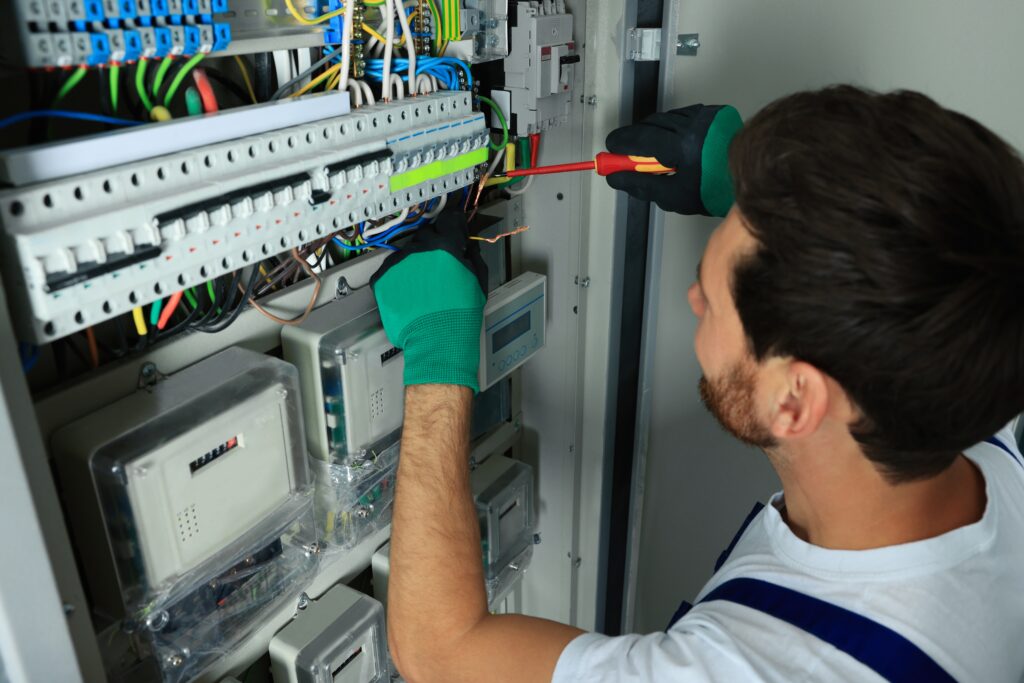
What happens when the lights momentarily dim during an important client presentation — or when a breaker trips, leaving an entire bank of point-of-sale (POS) registers down? Your entire day is thrown off course at best. But sometimes, those small electrical anomalies are symptoms of a much larger problem lurking behind the walls of commercial Central Texas facilities.
Whether you own your building or simply occupy a commercial space, your business depends on a reliable foundation of electricity flowing to power outlets and equipment to stay productive, keep occupants safe, and avoid damaging expensive equipment. When something fails, it hurts your bottom line: think revenue lost, spoiled data, and damage to your company’s reputation.
The good news is that by knowing the common signs of electrical wear and tear, facility managers and business owners can prevent a small problem from snowballing into an emergency that forces their business to close its doors. Let’s discuss how to recognize if your building is at risk and what you can do about it.
Understand the Commercial Electrical Grid
Electricity in commercial buildings behaves very differently from that in residential environments. Businesses require high draw on lighting, HVAC, servers, equipment, and more — often 24/7.
Without commercial electrical systems working properly, you would be stuck in the dark. Everything from employee productivity to your company’s online presence depends on a complicated arrangement of wires and switches behind your walls.
Working as intended, your electrical system also helps your facility run more efficiently by using less power. But when parts of your electrical system begin to wear out, your system uses more energy than it needs to, which can create heat. As electrical components heat up, they wear out faster. Ensuring your electrical system is up to par also keeps you up to code, protecting your local commercial investment.
Common Commercial Electrical Problems
There are several ways your facility can start showing you it needs commercial electrical repair. Some problems are more obvious safety hazards than others. Either way, these are some of the most common issues we see commercial facilities facing.
Overloaded Systems
Chances are, your business has increased square footage and/or added new equipment, computers, or machinery to the space over time. However, your facility’s electrical system was not designed to grow with your business. When you plug too many devices into one circuit, it creates an overload, tripping breakers when too many high-draw appliances are turned on at once. If you experience this issue frequently, this is a sign that there are business electrical issues within your facility that need to be addressed.
Aside from constantly tripping your breakers, overloading your system can wear out the insulation around your wires from the heat they produce. Over time, this heat can melt the wire’s protective coating — leading to possible electrical fires. Instead of resetting that breaker for the 5th time today, it may be time to revisit your overall business load or add a dedicated circuit for your new operations.
Outdated Wiring
Your office building or facility has most likely been standing for far longer than your business has been open. While your facility’s skeleton may be strong, its wiring system may be made of materials used decades ago.
Old wiring supplies, like aluminum or outdated thermoplastic, simply cannot keep up with the power demand of your digital business. When old wiring is exposed to constant high-load use, it becomes brittle and is more susceptible to arcing, which is one of the leading causes of commercial fires.
If you smell a faint burning odor coming from an outlet, see discolored wall plates around your business, or hear a buzzing sound coming from inside your walls, you should have a professional assess the state of your wiring. Commercial electrical repair will be needed to replace your wires with commercial-grade copper that can handle your business today and into the future.
Power Outages
Complete power outages can be caused by a local piece of equipment failing or an unstable power grid. Here in Central Texas, severe thunderstorms often wreak havoc on our local power grid — leaving local businesses in the dark. If your facility experiences a power outage, every process stops. Computers shut off (potentially ruining unsaved data), production lines stop, and security systems are put at risk.
Instead of waiting for the power to go out, there are steps you can take to prevent electrical downtime. To properly prepare for power outages, you should first evaluate weak spots in your facility’s internal power distribution system. Add automated backup generators and uninterruptible power supplies (UPS) to keep critical equipment powered if the power goes out.
Light Fixture Failures
Nobody works at their full potential under inadequate lighting. Buzzing lights, burnt-out light bulbs, or burned-out exit signs are all signs of malfunctioning ballasts, old fixtures, or unstable voltage distribution throughout your commercial building. Improper lighting can cause safety issues and fail your facility’s next routine inspection.
Equipment power issues can occur when localized pieces of equipment are failing you. Commercial ovens, hospital patient monitors, CNC machines—when these machines don’t receive proper voltage, they can act up or shut themselves off to protect their internal components. Voltage variations wear out the sensitive electronics inside your equipment faster.
Is Your Business at Risk?
Take a walk through your commercial space and ask yourself these three questions:
- Do your lights flicker when large equipment or your HVAC system turns on?
- Have you ever noticed that your electrical panels or outlets are warm to the touch or discolored?
- Do your employees use multiple extension cords or power strips to plug in their computers and equipment?
Based on your “Yes” answers, your commercial facility may be suffering from unseen electrical stress, which will need a professional eventually, and the sooner the better.
Impact on Business Operations
Nothing hurts your business like stalled operations. Electrical problems can affect every department in your organization.
The most obvious consequence of electrical problems is lost income. If something in your system breaks, you are still paying employees to sit around and watch the clock until you can resolve the issue.
If you own a retail business, and your POS goes down, you can’t process transactions and upset customers. In a lab or medical facility, losing power could destroy months of research or put your patients at risk.
Electric motors have a much shorter lifespan when subjected to voltage fluctuations. Motors run hotter and less efficiently when your supply voltages are inconsistent.
Not to mention, businesses that aren’t kept up to code can be fined by regulatory agencies. If your wiring is exposed or emergency lights are not working, you are creating a safety issue and inviting injury to you or your employees.
Preventative Electrical Maintenance Options
Don’t wait for part of your electrical system to fail before you act. Prevent these problems from affecting your business day by conducting electrical maintenance for your business. A preventative maintenance plan consists of annual inspections, thermal images of your electrical panels, and testing of safety devices like GFCIs and surge protectors.
Your commercial electrical panels hold hidden clues that can only be seen when using thermal imaging technology. Hot spots inside your panel mean your system has loose connections or wires that are about to fail. By catching these small issues during off-hours, you can prevent unexpected downtime and lengthen the life of your facility’s electrical system.
When to Hire a Commercial Electrician
Commercial buildings aren’t wired like residential homes. Your maintenance technician or handyman probably isn’t qualified to touch your electrical panel. When dealing with complex commercial power problems, there are certain tasks that should only be performed by a licensed commercial electrician. Powering your business correctly and keeping up with state electrical codes is no simple task.
Commercial electricians have the tools and training to work with complex wiring systems and high voltage safely. Do not risk hurting your employees, breaking your warranty, or invalidating your insurance policy by working on your commercial power system alone. Always hire a licensed professional who is familiar with the latest NEC and Central Texas building codes.
Protect Your Business | Call on ADG Electrical
Your electrical system is only as strong as its weakest component. At ADG Electrical Services LLC, we know that happy customers start with reliable power for your business. Our family-owned business has been serving the Austin area for 3 generations. We take pride in quality work, safety, and our relationship with the community we serve. We conduct every project with integrity and provide you with specialized solutions that you can trust.
Don’t let hidden electrical problems put your facility at risk. From emergency commercial electrical repair to scheduled maintenance or whole infrastructure upgrades, ADG-Electrical can handle your commercial electrical needs. Contact our office today to schedule your service or receive a free quote. Reach out today and let us protect your power supply.
Frequently Asked Questions
Q. What are the top electrical problems you see in commercial buildings?
The most common electrical issues include outdated wiring, overloaded circuits, flickering lights, and power fluctuations. These problems are usually the result of old electrical systems being taxed by the power demands of today’s office technology and heavy-duty machinery. It is best to hire an electrician to repair any damaged wiring and perform panel upgrades when needed.
Q. How can electrical maintenance help my business avoid downtime?
Preventive maintenance catches minor issues before they become big problems. Licensed electricians can detect unseen hazards such as loose connections or deteriorating components with the use of a thermal camera. Spotting electrical issues during your yearly inspection can help you avoid sudden outages and keep your business running smoothly.
Q. What’s the difference between a general handyman and a commercial electrician?
Commercial buildings use large amounts of power and have unique wiring systems that must be up to code. Commercial electricians are licensed to know the commercial wiring systems found in businesses and are trained to work with these higher voltage systems safely. You risk fire hazards, voided warranties, and insurance claims by having an uncertified technician work on your electrical system.