
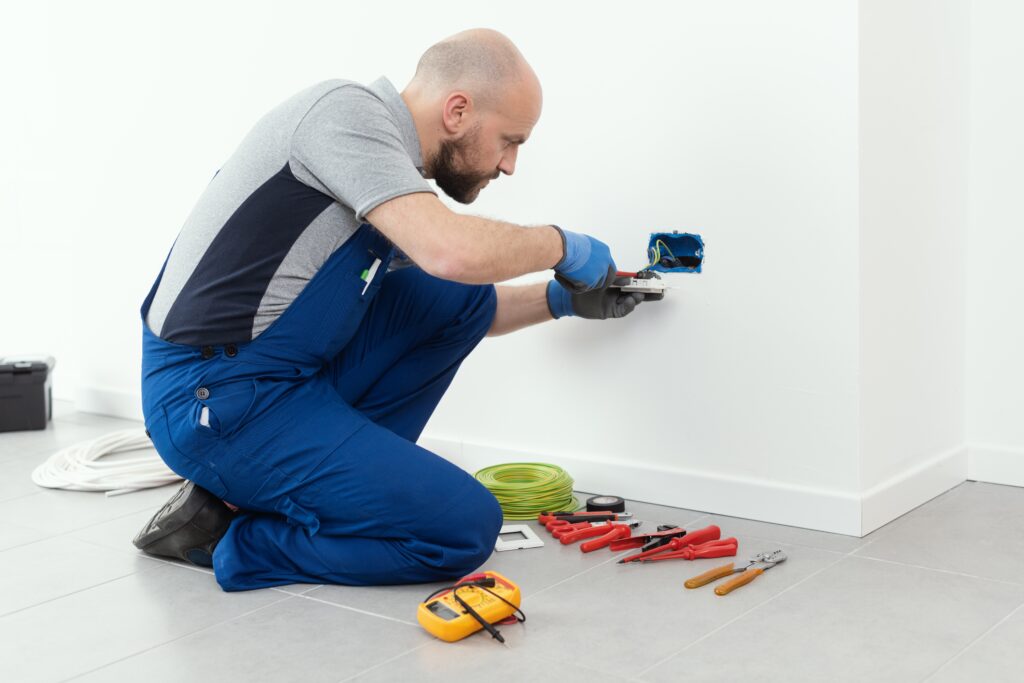
Your household relies on electricity for everything. From jumpstarting your family car to cooling your house on a hot summer day, your electrical panel is constantly working behind the scenes to keep modern life going. But like any aspect of your home, your wiring and components can wear down over time. Learning about the most common electrical problems can help you make sure your family is safe and that minor issues don’t become household disasters.
Homeowners often see these warning signs every day but don’t think twice about a few lamps blinking or a single outlet not working. Learning how your switches and outlets work allows you to recognize when you may have electrical problems at home. Review these common issues that occur in most residential households and learn how to troubleshoot them safely.
Common Household Electrical Issues
Dead outlets
Pulling up to your house after a long day and plugging in your cellphone charger only to find no power in the outlet can be extremely aggravating. One of the most common electrical problems in homes is dead outlets. Usually, this issue is caused by a tripped GFCI (Ground Fault Circuit Interrupter).
What looks like a normal outlet is specifically designed to cut the power fast when detecting moisture in the air or faulty wiring, preventing you from getting shocked severely.
Another reason for your outlets to die is due to a loose connection from a wire behind your wall. Over time, plugging and unplugging items can loosen the screws on the terminal and disrupt the circuit, stopping all power from flowing.
Frequent breaker trips
Your electrical panel is the control center for your entire home’s power. Whenever a circuit trips, it is doing its job by cutting off electricity to that zone to prevent the wires from overheating. If you experience frequent trips, it is a sign you may have an overloaded circuit.
Typically, this issue is caused by running too many high-wattage appliances on the same circuit. Microwaves, toaster ovens, space heaters, etc., all pull a large amount of amps when they are on. Plug them all into the same kitchen circuit, and you will trip the breaker every time.
Frequent tripping can also be a sign that you have what is called a short circuit. This is when a hot wire comes into contact with a neutral wire, causing a large spike in amps, which your breaker detects.
Flickering lights
Does it seem like every time your refrigerator turns on, or your heater kicks in, your overhead lights dim for a second? You’re not imagining things. When large appliances are plugged in and turned on, they pull a large amount of power initially. This momentarily sucks the current from the rest of the circuit your lighting is on.
Occasional minor dimming can be normal, but if it is happening constantly or very severely, there could be a serious problem. Loose wires in your main service panel, an old electrical meter base, or damaged utility connections can all cause your lights to flicker.
Warm outlets
Have you ever plugged something into an outlet and noticed the plastic cover plate was warm or hot? This is NOT normal and needs to be looked at ASAP. When current travels through your wires and encounters resistance, it causes heat.
An outlet or switch should never be warm to the touch. Common causes for this are loose terminal screws, corrosion, and overloaded circuits. Think of the extra heat this is generating inside your walls. If left alone, this could melt the plastic outlet itself and start a fire.
Power surges
A power surge is defined as a brief, drastic increase in voltage. What most don’t realize is that power surges happen every day in your home! Most people think of surges as major events like lightning strikes or a power station explosion.
Yes, these dramatic events cause tremendous surges but smaller ones happen many times a day when high-powered appliance motors turn on and off. Think of it as small ripples traveling through your wires every time your ice maker fills or your garage door moves.
While not as dramatic, these small daily surges can damage your electronics over time. Television screens, computer chips, and smart appliance modules are all vulnerable.
DIY Safety Tips
You can prevent yourself from getting into trouble by taking a few precautions when handling general home maintenance. Here are some electrical repair tips to keep your family safe:
- Test your GFCIs monthly. Hit the “Test” button on all of your kitchen, bathroom, and outdoor outlets to ensure the “Reset” button pops out. This ensures the internal mechanism is functioning properly.
- Invest in surge protectors. Do not cheap out on power strips either. Quality surge protectors for your expensive technology will help prevent damage from daily power surges.
- Label your electrical panel. Spend one hour going around and clearly labeling every breaker in your main service panel. You’ll thank yourself later when you need to turn off power in a hurry and can easily identify each room.
- Inspect appliance cords. Make sure to look at the power cords on all of your appliances for cracks or fraying. Replace any damaged cords as soon as possible.
Home Electrical Problems Checklist
Answering yes to any of the questions below means your home is working harder than it needs to.
- Do your lights dim when your large appliances turn on?
- Are you using multiple extension cords to plug in electronics?
- Do you hear crackling or buzzing near your outlets?
Electrical Problems That Require a Professional
Checking to see if a breaker has tripped or pushing the reset button on a GFCI is not a problem for homeowners to fix. However, once you have to work with physical wires, it requires special education. Your local electrician has studied for years on load calculations, the national electrical code, and safety procedures.
Opening up your main service panel or troubleshooting complex outlet issues can lead to extreme shock or even death if you don’t know what you’re doing. Electrical fires are also a serious risk you run when working with wiring yourself. If you notice your outlets smoke, smell something hot like melting plastic, or your breakers trip as soon as you reset them, call a professional.
Professionals have the tools and knowledge to safely diagnose the problem without putting your family at risk. Certified electricians use advanced tools like voltage testers, multimeters, and infrared cameras to quickly find the source of the problem.
Preventive Maintenance and Electrical Solutions
The best solution to residential electrical problems is prevention. Having a certified electrician come out every few years and evaluate your home’s wiring can prevent major disasters. Your electrician can ensure all connections are tight in your panel, verify your house is grounded correctly, and check your system can handle today’s electricity draw.
Upgrade older components before they stop working completely. Not only will this save you money and prevent emergency situations, but it also gives you true peace of mind knowing your family is safe.
Call ADG Electrical Services for Professional Electrical Services
At ADG Electrical Services LLC, we understand that when you have electrical issues in your home, you need them fixed quickly and correctly the first time. Our licensed electricians are qualified to handle any of your residential electrical needs, from electrical panel upgrades to appliance repairs. We focus on providing excellent customer service while taking pride in what we do. Give us a call today! Our professional electrical services include, but are not limited to:
- Lighting Installation
- Install Tamper-Resistant (TR) Receptacles
- Residential Repairs
- Generator Sales & Service
- Home Energy Audits
Why Choose ADG Electrical Services?
Family-owned and operated since 2000, ADG Electrical Services prides itself on providing quality electrical services for the residents of Austin and Central Texas. We hire only the best technicians and continue educating our team on the latest electrical technology. We offer 5-year limited warranties on labor for new installations. Our customers enjoy peace of mind knowing we stand behind our work by offering a satisfaction guarantee on all services.
Frequently Asked Questions
Can light fixtures cause circuit breakers to trip?
Many things can cause your circuit breakers to trip. Even light fixtures on the circuit can cause an overload. However, the standard incandescent 60-watt light bulb draws very little power. Each additional light on the circuit adds to the load.
Why do I keep tripping my AC breaker?
An AC breaker keeps tripping because the AC is pulling more amps than the circuit can handle. The solution is to move the air conditioner to its circuit or upgrade the electrical panel.
Why does my lamp turn itself off?
It could be faulty wiring or a defective lamp socket. When power flows through a restriction, it creates heat. Once that heat builds up enough, it will cause your lamp to turn itself off.
Why does my LED light flicker?
LED lights are very sensitive to minor power fluctuations, and this is what causes them to flicker. If you have marginal wiring or a loose connection in your home, your LEDs will flicker.
Is it safe to change an outlet by yourself?
Yes! As long as you turn off the power from the main electrical panel, you can replace an outlet by yourself. Even though your outlet is “Powered Off” in the main electrical panel, you should still test it with a voltage detector.
Will one bad outlet trip my breaker?
Your breaker will NOT trip when one outlet goes bad or starts malfunctioning. Typically, when an outlet goes bad, they burn the outlets around them out as well since they are wired together.
Will water damage cause outlets to malfunction?
Damaged power outlets do not always turn into electrical hazards. Often, it will just cause them to malfunction and need to be replaced.