
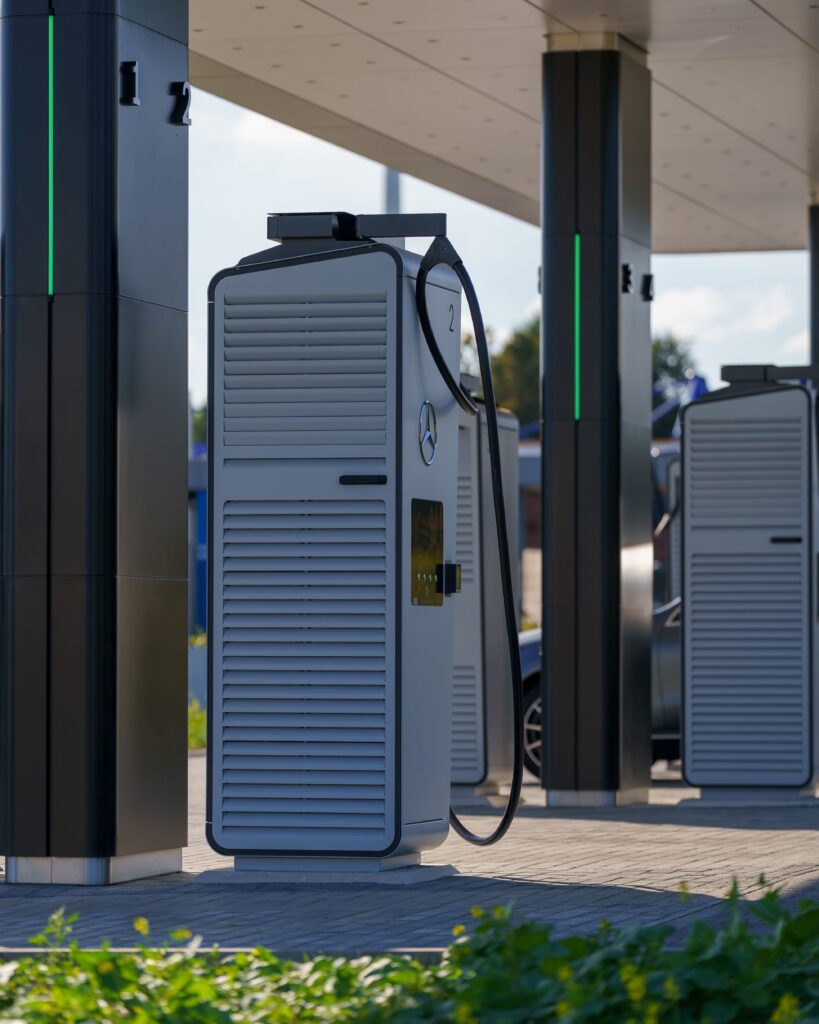
Switching to electric vehicle charging technology changes everything about how you fuel up for your daily commute. Installing an EV charger and moving away from generic public options to personal residential stations creates the most value for your investment. It also increases home value and gives you daily peace of mind that your car is ready to go each day. Learning how these systems work allows drivers to intelligently invest in their home’s EV charging installation.
What Is an EV Charging Station?
Essentially, an EV charging station is an electrical apparatus that administers alternating current or direct current to an electric car. Charging stations regulate heat, communication, and safety features far beyond your home electrical outlet.
When you plug your electric charger into a normal wall socket, you are limiting its maximum output. This means you’re going to be charging for a lot longer than you should. EV charger stations have multiple failsafes that monitor your ground potential and load balancing. This allows large amounts of electrical current to enter your vehicle safely without overheating your house outlets.
Types of EV Chargers
EV chargers come in three different levels that are distinguished by incoming voltage levels, amperage, and charging speeds. When choosing what is right for you, consider how many miles you drive daily and what your home can support.
Level 1 Charger
Level 1 charging stations come from a regular 120-volt household AC plug. We are literally talking about the same type of outlet you would use to plug in your bedroom lamp or laptop. Level 1 charging is going to be the slowest option because it can only put out a small amount of electricity per hour.
Level 1 is perfect for those who only drive a few miles to work and back or maybe want something for weekend driving. Anything beyond that, and you will be waiting around for a long time to go mobile with your vehicle again.
Level 2 Charger
Level 2 stations operate on a 240-volt AC source. This is the same amount of power your heavy-duty dryer or AC unit uses to operate. Level 2 is going to be the most common option for homeowners who want a quality EV home charging installation. You can easily plug in overnight and get to full again in a short period. You will need a qualified electrician to install a level 2 charger and ensure it is up to code.
Level 3 DC Fast Charging
Level 3 chargers send DC power directly to your vehicle’s battery without using your car as a converter. This commercial-grade charging station can fully charge some vehicles in under 30 minutes. Level 3 units are usually reserved for businesses that install commercial EV charging stations and public charging locations.
Why Get an Electric Vehicle Home Charger?
A home electric vehicle charger installation gives you one less thing to think about each day. You’ll spend less money in the long run and your car’s battery will operate at maximum efficiency. Charging at home will change how you view vehicle ownership. Instead of making charging another public chore, you’ll be thanking yourself every time you plug in.
- Benefit: Time Saved — Charge during sleep. Wake up and go, ready to roll!
- Benefit: Money Saved — Charge during off-peak hours and keep more of your hard-earned cash
- Benefit: Increased Home Value — Upgrade your home infrastructure and sell your house for more when it’s time
By plugging in at home, your car never has to experience extreme temperatures while charging. Thermal management is a huge component of battery life and efficiency. Who wants to drop $10,000 on a new battery only to shorten its life due to public charging? Say goodbye to range anxiety and taking hits on your monthly electricity bill.
Cost to Install an Electric Vehicle Charging Station
The cost of installing an EV charging station will vary depending on what type of charger you purchase, how far the wires need to run to your electrical panel, whether you need a permit from the city, and who installs it. The complexity of your home is the leading factor in your cost.
- Electrical Panel: If your panel is old,, you may need to upgrade
- Distance to Car: Installation cost rises with distance
- Charger Quality: WiFi-enabled models and dual ports cost more
How much it costs to install EV charging at home can differ wildly depending on whether your current electrical panel has space for a new circuit breaker. Some older homes have electrical panels that aren’t capable of handling a 50-amp or 60-amp circuit. Make sure to invest in quality materials that will last a lifetime. We recommend 12-guage copper wire for your new install.
Tips on Picking the Right EV Charger
Picking the right EV charger for your home starts with what you plug into your car. Once you know that, you can figure out how fast you’d like to charge and where you plan on installing the charger station. When it comes to technology, try to future-proof your purchase when you can.
Many charging stations today come equipped with smart WiFi capabilities. You can set schedules for the charger to only turn on during off-peak hours when your electric provider charges less for kilowatts. If you will be installing outside, make sure to get a charger that has a weatherproof enclosure. Always read the output specifications; you don’t want to purchase a charger that is underrated for your vehicle.
Why You Should Hire a Local EV Charging Electrician
Hiring a professional EV charger installer will guarantee your installation meets code, you don’t over-tax your home infrastructure, and you don’t accidentally void your vehicle’s warranty. Don’t chance it with something as important as electricity.
240-volt power increases complexity due to potential circuit overloads. Incorrect wire size and poor connections lead to fire hazards. You also risk damaging your vehicle if you install your charging station incorrectly. Licensed electricians use software to help determine your home’s capacity and can size your breaker properly to be safe.
Choosing ADG Electrical Services
At ADG Electrical Services, we want you to learn as much as you can about EV charging stations for your home. But remember, we are here to make sure your next installation is stress-free. We are a third-generation family-owned electrical contractor serving the city of Bertram, Liberty Hill, and all of Texas Hill Country. Our team prides itself on taking care of your home the way we would ours. (TECL #33805. License provided by the TDLR.)
Our experts can handle any EV charging station installation or electrical panel upgrade your home needs. We care about bringing value to our customers by walking you through the process. Everything from load calculations, permit submission, and setting up your equipment.
Schedule your free consultation or service today!
Frequently Asked Questions
Q. Can I charge my electric car with an extension cord?
No, never under any circumstances should you use an extension cord for your charger. They are not made to sustain continuous high amps and can cause a fire hazard in your home.
Q. Will my electrical panel need an upgrade for Level 2 charging?
Possibly. If you only have 100 amps coming into your home, you’ll need to upgrade to a 200-amp panel. Level 2 chargers require a 40-amp to 60-amp circuit to operate.
Q. Is it okay to get my EV charger installed while it’s raining outside?
Absolutely! All of our electric EV charger installations are done with weatherproof boxes. They are designed to keep water from getting inside while charging your vehicle. If any moisture is detected, the current will automatically shut off thanks to ground-fault sensors.